Gut Health and Weight Loss: How Your Microbiome Shapes Metabolism
| The idea | The trillions of bacteria in your gut help decide how you digest food, feel full and store energy. |
| What helps | Fibre-rich whole foods, prebiotics (inulin, resistant starch) and targeted probiotic strains. |
| The catch | Gut health is one lever among several — sleep, movement and overall diet still matter. |
When to see a doctor. This article is general information, not medical advice, and no supplement is a treatment, drug or cure for obesity or any other condition. Weight that falls rapidly or without you trying — or any weight change alongside fatigue, fever, night sweats, a lump, blood in the stool or a lasting change in bowel habit — needs a doctor rather than a supplement. Please get it checked before you change anything, and speak to your clinician first if you are pregnant, nursing, under 18 or taking medication.
For decades, weight was framed as simple arithmetic: calories in, calories out. That equation is still useful, but it leaves out a busy middle step — the trillions of microbes living in your digestive tract. Collectively called the gut microbiome, these bacteria help break down what you eat, produce compounds your body uses, and send signals that influence hunger, fullness and even how efficiently you store fat. Understanding that link is one of the most practical shifts you can make in how you think about healthy weight. (Gut, 2015)
What the microbiome actually does
Think of your gut as a densely populated ecosystem. When it is diverse and well-fed, the “good” bacteria thrive and keep less helpful species in check. Several of the jobs these microbes handle touch directly on metabolism:
- ✓ Energy harvest. Different bacterial communities extract slightly different amounts of energy from the same meal.
- ✓ Appetite signalling. Gut microbes interact with hormones such as GLP-1 and PYY that tell the brain you are satisfied.
- ✓ Short-chain fatty acids. When bacteria ferment fibre, they produce compounds like butyrate that nourish the gut lining and support a steady metabolism.
- ✓ Low-grade inflammation. A balanced gut barrier helps keep the chronic, background inflammation associated with weight gain in check.
Studies comparing people at different body weights consistently find differences in the makeup of their microbiomes. That does not mean bacteria alone determine your size — genetics, diet, activity and sleep all play major roles — but it does mean the gut is a lever worth paying attention to. (The Lancet Gastroenterology & Hepatology, 2017) Appetite is usually where people notice it, which is why the gut comes up so often in explanations of feeling hungry even after eating.
Prebiotics vs. probiotics: the fuel and the reinforcements
Two words come up constantly in this conversation, and they are easy to mix up.
A probiotic is a live, beneficial bacterium you take in — through fermented foods like yoghurt, kefir and sauerkraut, or through a supplement. A prebiotic is not alive at all; it is a specific kind of fibre that your own digestive enzymes cannot break down, so it travels to the lower gut where resident bacteria ferment it for fuel. In other words, probiotics are the reinforcements and prebiotics are the food that keeps them working.
This is why the two are so often paired. Sending in probiotic strains without feeding them is like planting a garden and never watering it. Two of the most researched prebiotics are chicory-root inulin and resistant starch (including the resistant starch found in cooked-and-cooled potatoes). Both reliably reach the colon intact and are readily fermented into those beneficial short-chain fatty acids. (Nature Metabolism, 2024) That same fermentation is why a sudden jump in prebiotic fibre can leave you gassy for a few days — the mechanism behind a lot of constant bloating.
The strains researchers keep returning to
Not all probiotic bacteria are interchangeable. A handful of species show up again and again in metabolic research:
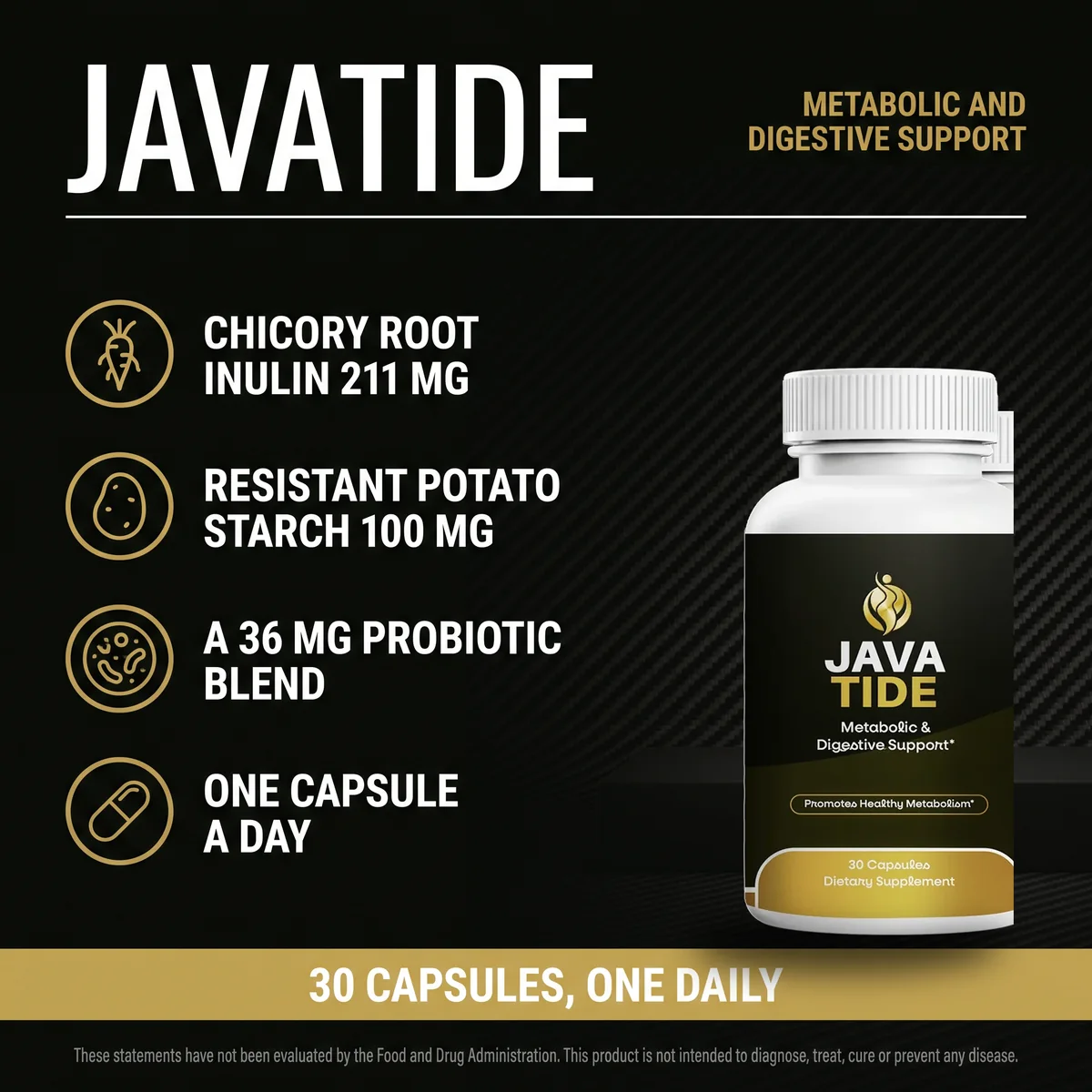
Akkermansia muciniphila lives in the mucus layer of the gut and has become one of the most talked-about strains in metabolism research; lower levels are frequently observed in people carrying excess weight. Bifidobacterium infantis is a foundational species associated with a calm, balanced gut environment. Clostridium butyricum is a notable butyrate producer, feeding the very short-chain fatty acids that support the gut lining. These are the kinds of targeted strains a modern gut-first formula — such as Javatide — tends to combine with prebiotic fibre rather than relying on a single generic probiotic. (Nature Medicine, 2019)
Support your gut the simple way
Javatide pairs prebiotic chicory-root inulin and resistant potato starch with a targeted probiotic blend — in one daily capsule, backed by a 60-day guarantee.
See Javatide PackagesA practical, gut-first routine for weight support
You do not need to overhaul your life to give your microbiome a better chance. A few consistent habits do most of the work: They sit alongside the wider changes in our guide to losing weight without exercise, and they are worth revisiting if you are working out why your weight loss has stalled.
- ✓ Eat a wider range of plants. Diversity of fibre feeds diversity of bacteria — aim for different vegetables, legumes, whole grains, nuts and seeds across the week.
- ✓ Prioritise fibre, not just calories. Most adults fall well short of the recommended 25–38 grams a day. Prebiotic fibres are an easy way to close part of that gap. If you would rather close that gap from the plate first, our list of the best high-fiber foods for weight loss shows where the biggest gains are.
- ✓ Include fermented foods. Small, regular servings of yoghurt, kefir or kimchi introduce live cultures alongside your meals.
- ✓ Move most days. Physical activity is independently associated with a more diverse microbiome.
- ✓ Protect your sleep. Poor sleep disrupts appetite hormones and the gut alike, quietly undermining the rest of your effort.
One more overlooked detail: hydration. Prebiotic fibre draws water into the digestive tract, so increasing your fibre intake without also drinking more water can leave you feeling bloated rather than better. Ramp up gradually over a week or two, drink a full glass of water with any fibre supplement, and give your gut time to adjust — the discomfort some people blame on a product is often just too much, too fast.
A supplement can complement — not replace — these basics. If your diet is short on fibre or you want to reinforce specific strains, a combined prebiotic-plus-probiotic capsule is a low-effort way to stay consistent day to day. The value is less about any single dose and more about showing up for your gut every morning, the same way you would for brushing your teeth or taking a daily walk.
Setting realistic expectations
It is worth being honest about what the gut can and cannot do. Improving your microbiome is not a shortcut around energy balance, and no bacterium melts fat on its own. What a healthier gut can do is make the fundamentals a little easier: steadier digestion, fewer cravings driven by blood-sugar swings, and a metabolism working with rather than against you. Those small advantages, repeated daily, are exactly the kind that compound over months. Results vary from person to person, and this article is general information rather than medical advice — if you have a health condition or take medication, talk with your doctor before making changes.
Frequently asked questions
Can improving gut health really help with weight?
Research links the balance of gut bacteria to how the body extracts energy from food, regulates appetite hormones and manages inflammation. A more diverse, well-fed microbiome is associated with easier weight management, though it is one factor among many — diet, sleep, movement and stress all matter too.
What is the difference between a prebiotic and a probiotic?
A probiotic is a live beneficial bacterium you consume; a prebiotic is the fibre that feeds those bacteria. Prebiotics such as chicory-root inulin and resistant starch act as fuel, while probiotic strains are the reinforcements — which is why the two are often paired.
How long does it take to notice a difference in gut health?
The microbiome can begin shifting within days of a dietary change, but most people give a new fibre or probiotic routine several weeks of consistent use. Results vary from person to person and are not guaranteed.
References
- Effects of targeted delivery of propionate to the human colon on appetite regulation, body weight maintenance and adiposity in overweight adults. Gut (2015). PubMed PMID 25500202.
- The microbiota-gut-brain axis in obesity. The Lancet Gastroenterology & Hepatology (2017). PubMed PMID 28844808.
- Resistant starch intake facilitates weight loss in humans by reshaping the gut microbiota. Nature Metabolism (2024). PubMed PMID 38409604.
- Supplementation with Akkermansia muciniphila in overweight and obese human volunteers: a proof-of-concept exploratory study. Nature Medicine (2019). PubMed PMID 31263284.
† These statements have not been evaluated by the FDA. This product is not intended to diagnose, treat, cure or prevent any disease. This article is for general information only and is not medical advice.